An up-to-date list of publications can be found here
Publication Highlights
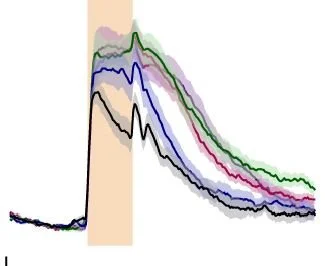
Multidimensional control of ingestive behavior by lateral hypothalamic neurotensin neurons (bioRxiv)
Lateral hypothalamus neurotensin neurons have long been implicated in many aspects of consumption, but how activity patterns of these neurons relate to specific behavioral functions was unclear. We measured LH-Nts calcium activity during a precisely controlled head-fixed licking task and found that these neurons encode consummatory action with a preference for water over sucrose. Silencing these neurons reduces water intake and impairs a number of underlying behaviors that influence food reward seeking, including arousal, volitional movement, and engagement with novel resources, indicating that these neurons play an important role coordinating neural circuits governing multiple different aspects of ingestion.
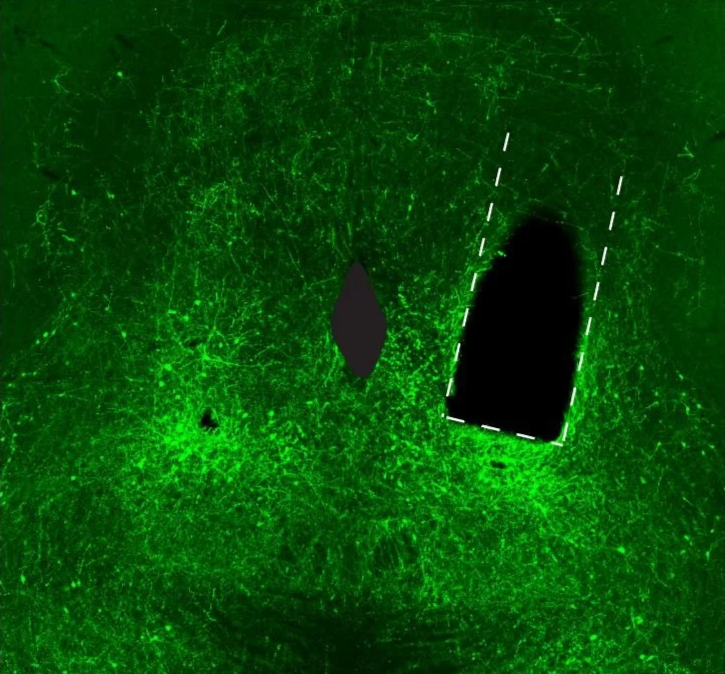
Periaqueductal gray neurotensin neurons drive simultaneous threat response and reinforcement (bioRxiv)
We identified a population of neurotensin neurons that project from the periaqueductal gray (PAG) to the ventral tegmental area. These neurons are activated by threatening and painful stimuli, and are inhibited when an animal is in a safe place. Optogenetic stimulation of PAG neurotensin neurons causes freezing and tail rattle, a known threat response in mice, but also drives dopamine neuron activation, which may serve as an important salience signal.

Opto-seq reveals input-specific immediate early gene induction in ventral tegmental area cell types (Neuron)
The ventral tegmental area, home to many dopamine neurons, receives synaptic input from many brain regions. Here we combined optogenetics with snRNAseq to identify specific populations of VTA neurons activated by stimulation of specific inputs. We also found differential expression of immediate early genes (IEGs) in different cell types and were able to correlate the expression of specific ion channel genes with IEG activation in dopamine neurons.

The potassium channel auxiliary subunit Kvβ2 (Kcnab2) regulates Kv1 channels and dopamine neuron firing (J. Neurophys)
Ion channels consist not only of pore-forming subunits, but also of auxiliary subunits that can regulate trafficking as well as channel properties. We found that in dopamine neurons the auxiliary potassium channel subunit Kvβ2 regulates the surface expression of Kv1 channels and shifts the voltage dependence of inactivation, altering potassium currents and shaping the action potential waveform